Laboratory of Applied & Environmental Microbiology
Harnessing the power of microorganisms to remediate the environment and build a sustainable, circular society.
SCROLLAbout
We have produced and utilized numerous useful chemicals thus far. However, what happens to the waste containing these chemicals once it flows into the environment? In recent years, pollution of the marine environment by artificial substances known as microplastics has become a significant issue. Environmental pollution, including soil and rivers, has become one of the challenges we need to address on a global scale.
We aim to use microorganisms in the environment effectively to purify environmental pollution and reduce waste. To achieve this, we are discovering microorganisms that grow by consuming the chemicals causing pollution and uncovering their unique characteristics. Additionally, we are working on elucidating the genes, enzymes, and genome structure of these microorganisms at the molecular level to create efficient environmental purification systems.
Research
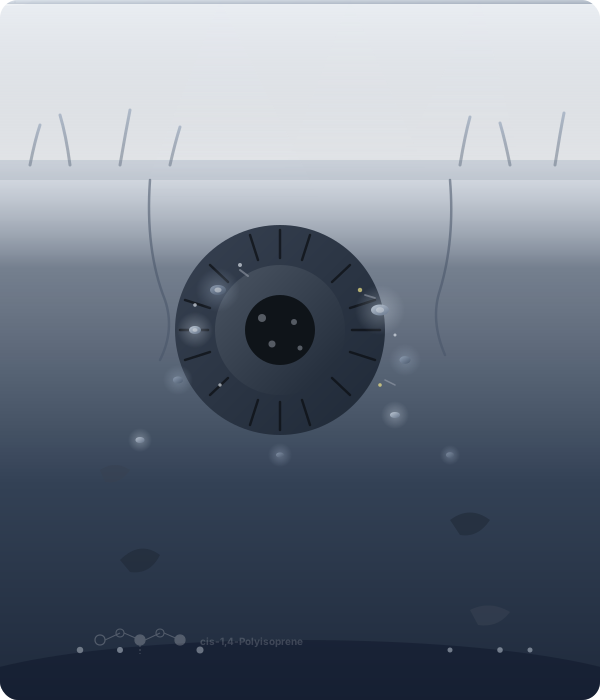
Natural rubber is a biopolymer containing polyisoprene as the main component, produced by over 2,000 plant species. Natural rubber from Hevea brasiliensis is used industrially for tires, seismic isolation rubbers, and medical gloves. The waste of these products has been treated by combustion or landfill processes, which are hazardous to the environment.
Rubber-degrading bacteria were screened for the production of clearing zones around their colonies on latex overlay agar plates. Novel rubber degrading bacteria which can produce a bio-plastics were isolated. We have determined the genome sequences of these bacteria and identified the genes responsible for rubber degradation and bio-plastics production. The biochemical characterization of the genes and gene products are ongoing to gain a better understanding of the microbial rubber-degradation mechanism in nature.
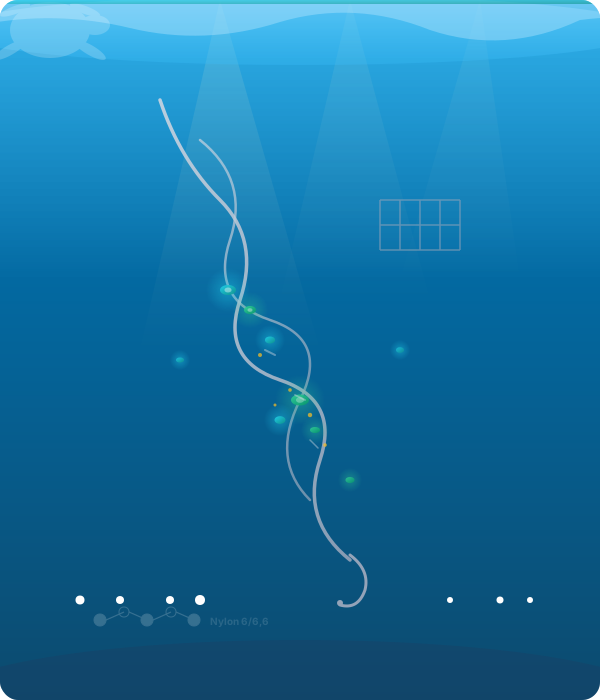
Fishing gear, such as fishing lines and nets abandoned in the ocean, is known as "ghost gear." It causes severe damage to marine ecosystems by entangling sea turtles and wild birds, or by breaking down into microplastics. Until now, it was a common global understanding that "nylon," a fiber frequently used for such fishing gear, does not decompose in the ocean.
However, recent research has discovered for the first time in the world that certain commercially available fishing lines (made from a copolymer of nylon 6 and 6,6) biodegrade in the ocean at a level equivalent to "cellulose," a typical easily decomposable material in nature.
Our laboratory is participating in this joint research project as experts in microorganisms, genes, and enzymes, taking on the challenge of elucidating the biodegradation mechanism—asking, "Why is this nylon degraded by microorganisms in the sea?" By solving this mystery at the molecular level, we expect to advance the development of new, eco-friendly fishing gear and plastics, making a significant contribution to a fundamental solution for the global marine pollution problem.
Building a sustainable society through the power of microorganisms
News
Achievements
Our research findings are presented below.
VIEW MOREMember

Doctoral Program (5-year)
1st Year
Master's Program
1st Year
Undergraduate
4th Year
Research Student
Secretary
Access
We welcome graduate students (master's and doctoral programs) from outside the university and abroad, as well as JSPS research fellows. We are also actively promoting collaborative research with industry, academia, and government. If you are interested in our laboratory, please feel free to contact us.
DAISUKE KASAI
Kamitomiokamachi 1603-1, Nagaoka, Niigata, 940-2188, Japan